Yes. Turnitin detects raw ChatGPT output most of the time, and it has since it launched AI writing detection in April 2023. Copy-paste an unedited ChatGPT essay and you are taking a serious risk. But the full answer has more layers: what Turnitin actually looks at, what it misses, what it stores, and what happens when honest writing gets flagged anyway. This guide walks through all of it.
How Turnitin detects ChatGPT in the first place
Turnitin runs two separate checks on every submission, and students mix them up constantly. The similarity report compares your text against a database of web pages, publications, and previously submitted papers. It catches copying. The AI writing report is different: a machine-learning model reads your prose in 5-to-10-sentence chunks and scores how statistically predictable each chunk is.

ChatGPT writes by always picking highly probable next words. The result is text with low perplexity (each word is unsurprising) and low burstiness (every sentence has similar length and shape). Human writing is messier. We mix short punchy sentences with long winding ones, make odd word choices, and take small detours. Turnitin's model was trained on exactly this difference.
We unpack the statistics in plain English in how ChatGPT detectors work, if you want the mechanics.
Can Turnitin detect ChatGPT every time? No, and here is the pattern

- Raw ChatGPT output: usually caught. Turnitin claims 98% detection on unedited AI text, and independent tests broadly agree it is strong here.
- Lightly edited ChatGPT: still risky. Swapping synonyms or reordering a sentence or two leaves long stretches of machine rhythm intact, and the model scores passages, not individual words.
- Properly rewritten text: often missed. When the statistical fingerprint is rebuilt, sentence by sentence, there is no pattern left to flag. Turnitin's own material concedes it 'may not catch all AI writing'.
- Short answers: mostly invisible. Turnitin needs at least 300 words of long-form prose to score a document, so discussion replies and short responses often never get an AI score at all.
Does Turnitin detect copy and paste?
For the similarity side, yes, that is its oldest trick. Text copied from a website, a journal article, or another student's paper lights up with a match percentage and a link to the source. For ChatGPT specifically the answer is different: ChatGPT text is generated fresh, so it does not match a database source. Copy-pasted AI text is caught by the AI report, not the similarity report. That is why a paper can score 2% similarity and 90% AI at the same time.
Can Turnitin see your edit history?
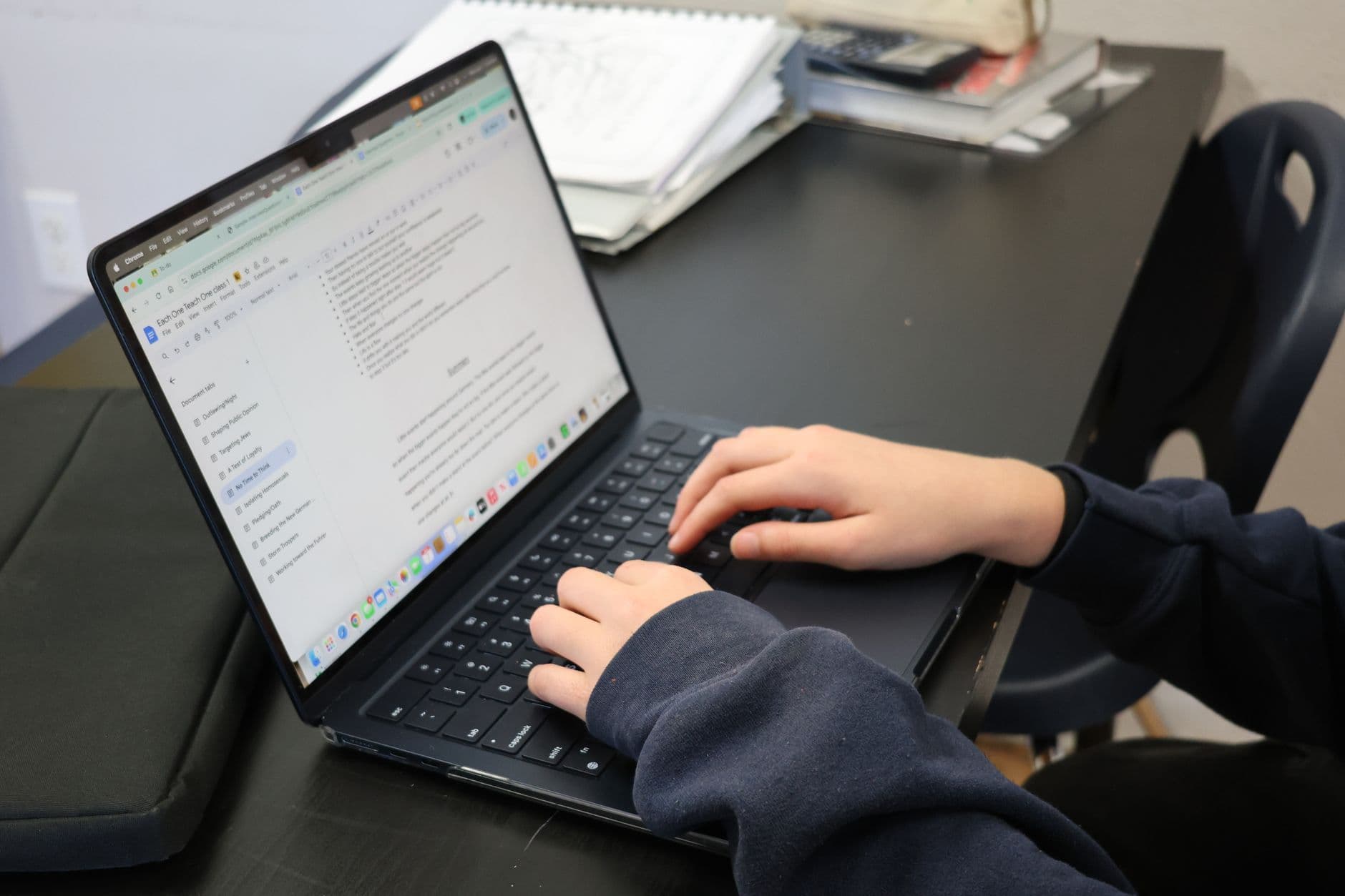
No. Turnitin sees the file you submit, nothing else. It cannot open your Google Docs version history, your keystrokes, or your drafts. But your instructor can, and this cuts both ways. If you are accused falsely, a Google Doc with hours of visible revisions is the strongest defense you can have. If a 2,000-word essay appeared in one paste at 2 a.m., that history tells its own story. Write in a document with version history turned on. Always.
Does Turnitin keep a record of your papers?
By default, yes. Submitted papers go into Turnitin's student paper repository unless your institution opts out, and that archive is how it catches one student submitting another's work years later. Practical consequences: submitting your own old paper to a new class can flag as 100% similar to yourself, and a draft submitted to a practice assignment can match your final submission. Ask your instructor how the assignment is configured before you panic about either.
The false positive problem nobody should ignore
Turnitin advertises a document-level false positive rate under 1%. Across millions of submissions, that is still thousands of honest students flagged every term. The risk is not spread evenly. A Stanford study found some detectors flagged over half of essays written by non-native English speakers, because careful, grammatically safe writing looks statistically predictable. Formulaic formats like lab reports flag more. Heavy Grammarly polishing flags more. Vanderbilt University disabled Turnitin's AI detector over exactly this concern in 2023, and it has plenty of company.
From the field: a graduate student we heard from had a literature review flagged at 40% AI. She wrote every word. What saved her was process evidence: the Zotero library, the outline in her notes app, and a Google Doc with three weeks of revision history. The score started the conversation; the paper trail ended it.
Using ChatGPT without gambling your grade
- Use AI for the parts that are legitimately its job: brainstorming angles, outlining, summarizing sources you have actually read.
- Write the draft yourself, in your own voice, with your own examples from the course.
If you started from an AI draft, rewrite it properly rather than cosmetically. A quality AI humanizer rebuilds sentence rhythm as a first pass, then your edits add the specifics no tool can invent.
Before anything important goes in, check it with a free AI detector so a surprise flag never ambushes you.
- Keep drafts and version history for every assignment that matters. Two minutes of habit, total accusation insurance.
How to check your own paper before you submit it
Five minutes of checking beats a semester of worrying. Here is the routine that works:
- 1. Finish the draft completely. A detection score on half-written text tells you nothing about the final paper.
- 2. Paste the full text into a detector and note which passages flag, not just the overall number. The passages are the actionable part.
- 3. Rewrite anything flagged: split one long sentence, combine two short ones, add a detail from your own lecture notes.
- 4. Run it again. If the flags moved around rather than disappearing, the rewrite was cosmetic. Go deeper on those sections.
- 5. Save the checked draft with a timestamp before submitting. If a dispute ever happens, that file is part of your evidence.
Mistakes that get honest students flagged
Most Turnitin problems we hear about are process problems, not cheating. The usual suspects:
- Drafting in a plain file with no revision history, so there is nothing to show when questions come.
- Accepting every grammar suggestion until the prose is uniformly smooth. Polished-flat writing looks statistically machine-like.
- Leaning on the same transitions and paragraph shape all the way through. Repetitive scaffolding reads as low variety, which is exactly the texture detectors score.
- Running a paraphrasing tool over your own human writing 'to be safe'. That adds machine texture instead of removing it.
- Waiting until after a flag to think about any of this. The evidence that clears you has to exist before the accusation.
Quotes, citations, and other edge cases
The AI report reads long-form prose, so several common elements behave in ways students do not expect.
- Direct quotes belong to the similarity side. Keep quotation marks and citations clean and let the match percentage reflect them; do not reword quotes to chase a number.
- Short pieces: below roughly 300 words of prose, Turnitin does not produce an AI score at all, so discussion posts usually go unscored.
- Non-native English: careful, grammatically safe writing flags more often, as the Stanford findings above showed. One more reason to keep drafts.
- Resubmissions: each new upload is analyzed fresh, sometimes by an updated model, so a score can shift between drafts of the same paper.
Frequently asked questions
Will Turnitin detect ChatGPT if I paraphrase it?
Manual paraphrase that genuinely restructures sentences usually drops the score a lot. Quick synonym swaps or basic paraphrasing tools usually do not, because the underlying rhythm survives. The deeper the rewrite, the safer the result.
Does Turnitin detect ChatGPT 4 and newer models?
Turnitin retrains its model as new generators ship, so newer GPT versions are covered, with a lag. Each new model briefly evades detection better, then the detectors catch up. Betting a grade on that gap is a bad trade.
Can Turnitin detect ChatGPT in code assignments?
The AI writing detector is built for long-form English prose, not source code. Code plagiarism is usually checked with different tools like MOSS, which compare structural similarity between submissions.
What AI percentage is safe on Turnitin?
There is no universal safe number, and instructors see the score, not you. Turnitin itself hides scores below 20% as unreliable. We break down what the numbers mean in what does the Turnitin AI score mean.
Does Turnitin detect ChatGPT if I only used it for an outline?
No. The detector reads the prose you submit, not your process. An outline or brainstorm leaves no statistical trace in sentences you wrote yourself. Whether outline-level AI help is allowed is a syllabus question, not a detection one.
Will editing an AI draft for an hour make it safe?
Time spent is not the measure; depth is. An hour of synonym swapping changes little, while twenty minutes of restructuring sentences and adding your own examples changes the fingerprint the detector reads. Judge the edit by how different the rhythm is, then verify with a detector rather than guessing.
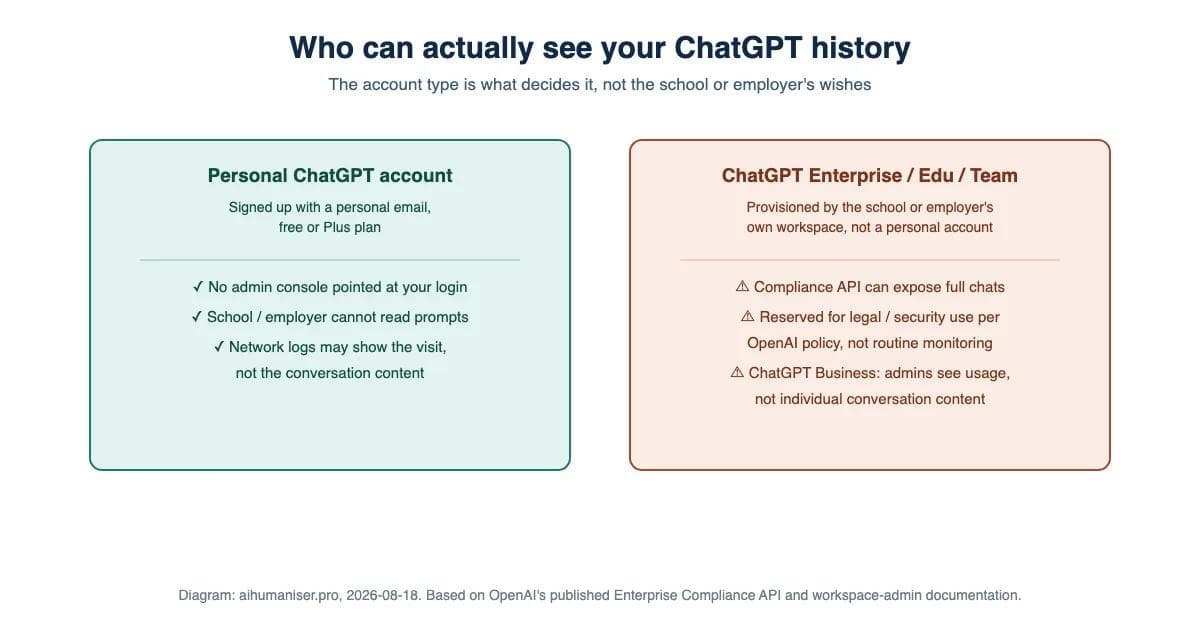
How this was made: this post predates this site's "How this was made" disclosure convention, which was added 2026-08-16. Drafting was AI-assisted with human editing. This paragraph and the diagram above were added during a 2026-09-01 accuracy pass; the diagram restates points the post already made, and no claim in this post was re-verified beyond what is stated above.