Short answer: often, yes. But rarely the way students imagine. Professors don't have a magic ChatGPT-radar. They rely on three signals: AI-detection reports, changes in your personal writing style, and how well you can discuss your own work. Understanding each one tells you exactly where the real risks are.
Signal 1: AI-detection reports
Most universities run submissions through Turnitin, whose AI-writing indicator flags statistically smooth, predictable prose. It's genuinely good at catching raw copy-paste AI text. We break down how it treats ChatGPT specifically in Does Turnitin detect ChatGPT? But it reports a probability, not proof, and it never names the tool that was used.

Detectors also get it wrong in both directions. Human work gets flagged and AI work slips through. The error patterns are well documented; see how accurate Turnitin's AI detection really is before assuming a score settles anything.
Signal 2: your writing fingerprint
The tell professors trust most isn't software. It's you. They've read your forum posts, your earlier essays, your emails. When a B-minus writer suddenly submits flawless, formal, strangely generic prose, the mismatch is obvious without any tool. Common giveaways:
- Vocabulary you've never used before ('delve', 'multifaceted', 'tapestry') appearing everywhere.
- Perfectly uniform paragraph structure: three tidy sentences each, every time.
- Confident-sounding claims with vague or invented citations. The classic AI hallucination.
- Zero connection to what was actually said in class or in the assigned readings.
Signal 3: the conversation test
The most reliable check costs nothing. A professor asks you to explain your argument. If you wrote it, even with AI help, you can defend it, rephrase it, extend it. If you pasted it, the gap shows in thirty seconds. Many academic-integrity cases are decided exactly here, not in a detector report.
What this means if you use AI at all
- Know your institution's policy first. Some courses allow AI-assisted drafting with disclosure and others ban it entirely. Nothing below overrides that.
- Use AI for structure and drafting, never as final prose. Rewrite everything in your own voice, with your own examples and course material.
Check your work before submission with a free AI detector so a surprise flag doesn't happen to you first.
If a draft still reads robotic after your rewrite, an AI humanizer restores natural rhythm. Then edit once more so the ideas and voice are unmistakably yours.
- Keep your drafts and version history. If you're ever wrongly accused, a Google Docs timeline is the strongest defence there is.
Frequently asked questions
Can professors prove I used ChatGPT?
A detector score alone isn't proof, and most universities say so in policy. Cases usually turn on writing-style mismatch, inability to explain your own work, or process evidence. Not on the percentage by itself.
Do professors check every essay with a detector?
Usually it's automatic. If the course uses Turnitin and the AI indicator is enabled, every submission gets a score the instructor can see. Whether they act on it varies enormously.
Is using ChatGPT for an outline cheating?
Depends entirely on the course policy. Outlining and brainstorming are allowed in many classes and banned in others. When in doubt, ask before you submit, not after.
Signal 4: your document's version history

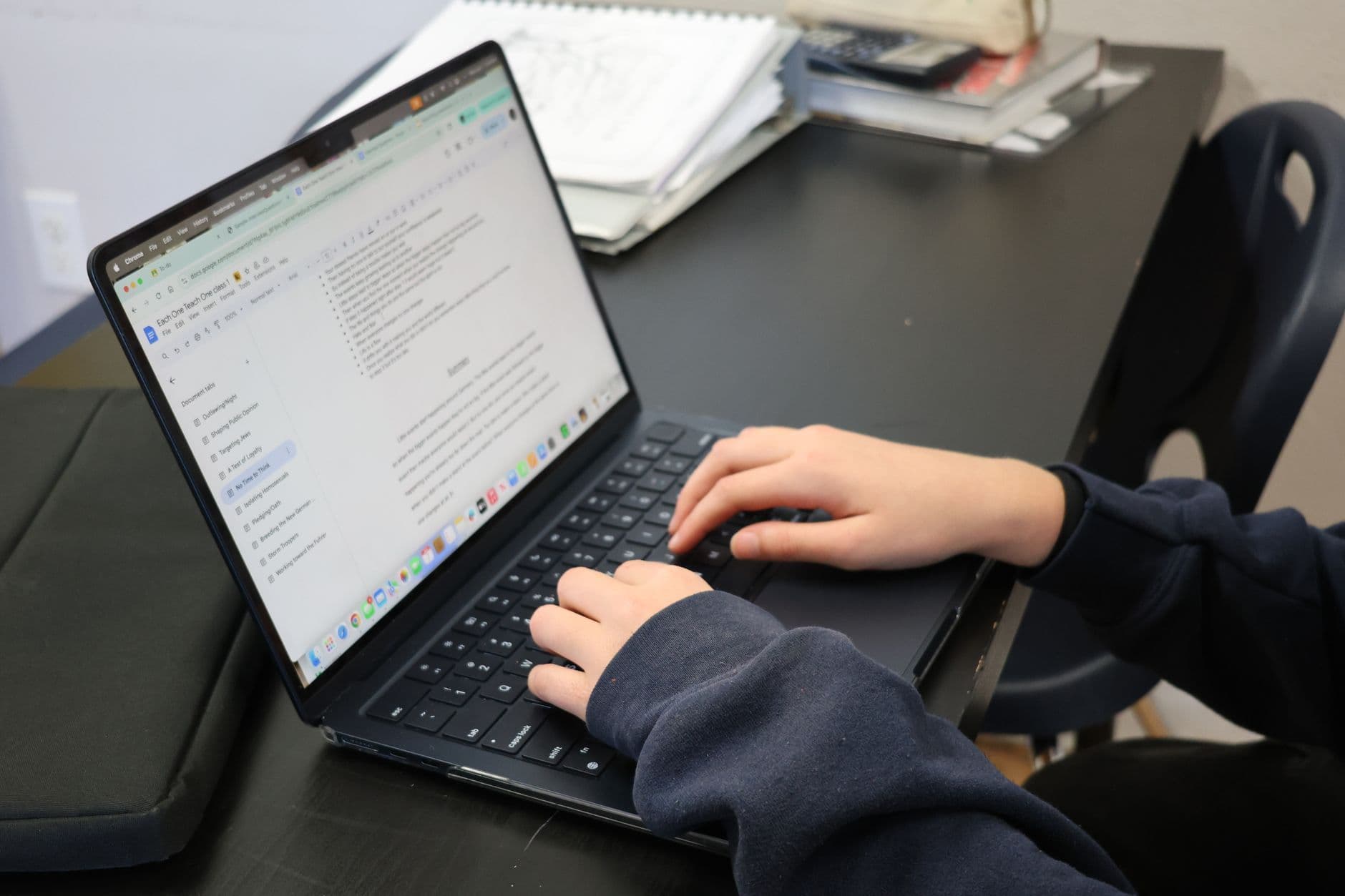
The most underrated check costs nothing and is not software at all. Google Docs records a version history automatically, and Word tracks revisions when the feature is left on. Real writing accumulates in messy sessions: typing, deleting, moving paragraphs, coming back after dinner. Pasted text arrives in one or two large blocks, usually late the night before the deadline.
Plenty of instructors look at that timeline before they ever open a detector, because a record of how a document grew is far harder to argue with than a percentage. It cuts both ways, which is the useful part. If you drafted the work yourself in one document over real sessions, that same history is the strongest evidence you will ever have.
None of these four signals holds up alone, and that is worth understanding from either side of the desk. A detector flag plus a thin version history plus a student who cannot discuss their own argument is convincing. Any one of them by itself misfires regularly, which is why every major detector vendor, Turnitin included, says a score should never be the sole basis for an accusation. The same logic explains why editing depth matters: light editing usually leaves the machine rhythm intact, while deep rewriting with your own specifics usually does not, because at that point the text largely is yours.
The fact-check that comes before the style check
Confident but wrong detail is more than a stylistic tell. Language models do not look facts up, they predict plausible next words, so when the training data thinned out on your topic the model still writes something plausible shaped, in the same unwavering tone it uses when it is right. Confidence is a writing style, not a knowledge state. The pattern to internalise: the more specific and checkable a claim is, the more likely it is wrong. General framing is usually fine, details are the danger zone.
So run a verification pass over anything AI helped draft before you worry about how it scores. Verify every named fact: dates, numbers, quotes, names, prices. These fail most often. And never trust a citation you have not opened yourself, because fabricated references look perfectly real. Studies of AI generated academic references have found large fractions that were wrong or simply did not exist, and legal filings built on invented case law have made the news repeatedly for the same reason.
One cheap habit catches a lot of the rest: ask the same question twice in different words, since contradictory answers mean the model is guessing. Asking a model to check its own work catches some errors and confidently repeats others, so the only reliable check is against real sources. Treat AI as a drafting partner with unlimited energy and unreliable memory and you will use it correctly, which is also the version of it your professor is least likely to notice.
What does a professor actually do when they suspect you used ChatGPT?
They follow a written procedure, and it usually starts before your paper is opened. The Office of the Independent Adjudicator, the student complaints ombuds for higher education in England and Wales, published a casework note on AI and academic misconduct on 15 July 2025. A student under suspicion should be told in writing what they may have done that breaches the assessment rules and why, be given sufficient notice of meetings, and be provided with all relevant evidence, including the detection software report itself.
The investigation is comparative rather than statistical. The note tells providers to compare the work against the student's earlier assessed work while being transparent about which pieces are being compared, to ask for notes and drafts, and to consider a viva focused on the content of the assessment. Vanderbilt University told its own instructors much the same on 16 August 2023, when it disabled Turnitin's AI detector: compare the writing to the student's other work, look for inaccuracies in sources and facts, and talk to the student. Turnitin's own FAQ agrees on the limit, stating that the percentage on the AI writing indicator should not be used as the sole basis for action or a definitive grading measure by instructors.
What should you do if you are wrongly accused of using ChatGPT?
Start from the fact that you are not required to prove your innocence. The same casework note states that the responsibility is on the provider to prove that the student has done what they are accused of doing, not on the student to disprove it, and that the finding is made on the balance of probability. Ask in writing for the specific allegation and the specific evidence, including which parts of the submission are said to be AI generated. If file metadata is being used, the note says providers should explain what they think the metadata shows and give you an opportunity to respond.
Then produce your own record: notes, outlines, annotated sources, earlier drafts. The note suggests providers ask students for copies of notes or drafts, so arriving with them puts you ahead of the process. Prepare to discuss the content, and do not panic if the assignment was months ago, because the note advises taking account of how long ago the work was completed when judging what a student remembers. Raise language or disability factors if they apply, since the note tells providers to consider whether assumptions about AI use could be biased against a student's writing style, for example where the student is disabled or English is not their first language. And get an adviser, because the note expects providers to signpost support such as a students union adviser.
How this was made: this post predates this site's "How this was made" disclosure convention, which was added 2026-08-16. Drafting was AI-assisted with human editing. This paragraph and the diagram above were added during a 2026-09-01 accuracy pass; the diagram restates points the post already made, and no claim in this post was re-verified beyond what is stated above.